Guide · July 28, 2026
What water filter removes microplastics?
Two filter types are physically consistent removers: reverse osmosis and ultrafiltration. Everything else — Brita, PUR, ZeroWater, even Berkey's marketed claims — is either uncertified for microplastics specifically or verified mostly by the manufacturer, not a third party. We tested each individually. Here's the side-by-side verdict.
The comparison
| Filter | Mechanism | Microplastic removal | Typical cost |
|---|---|---|---|
| Reverse Osmosis | 0.0001 µm membrane | Excellent — physics, not a claim | $150–$400 under-sink |
| Ultrafiltration (UF) | 0.01 µm membrane | Very good — physics, not a claim | $100–$300 |
| Carbon block (tight) | Depends on pore rating | Moderate — varies by model | $30–$100 |
| Berkey (Black Berkey elements) | Ceramic + carbon block | Claims >99.9%; mostly in-house testing | $300+ system |
| ZeroWater 5-stage pitcher | Ion exchange + carbon | Inconsistent — not certified | $25–$45 |
| Brita / PUR pitcher or faucet | Activated carbon | Inconsistent — not certified | $20–$40 |
Why pore size is the whole question
Microplastic particles run roughly 1–100 microns. Reverse osmosis membranes have pores around 0.0001 µm — about 10,000x smaller than the smallest particle in that range — so removal is a function of physics, not a marketing claim. Ultrafiltration sits at roughly 0.01 µm, still tight enough to be a consistent barrier.
Standard pitcher and faucet filters (Brita, PUR, ZeroWater) run on activated carbon and ion exchange, which are built and certified for chlorine taste, a handful of metals, and some pharmaceuticals — not particulate matter at microplastic sizes. A 2022 comparative study (Pivokonsky et al.) found granular activated carbon meaningfully less effective at microplastic removal than tighter membrane filters. That doesn't mean a carbon pitcher does nothing — it means there's no certification and no consistency to lean on.
Berkey is the outlier: gravity-fed ceramic + carbon elements the company claims remove >99.9% of a long list of contaminants, including plastics, from its own internal lab testing. Plausible given the tighter ceramic media, but independent third-party verification specific to microplastics is thin. Worth testing yourself if you own one.
Test your own filter
Certifications tell you what a filter was built for. They don't tell you what your specific unit, at its current age, is doing right now. The microplastics test kit (tests sold separately) runs a before/after comparison: one 100 mL sample from the unfiltered tap, one from your filter's output. The filtered-water testing guide walks through the exact protocol for a pitcher, a fridge dispenser, or an RO system.
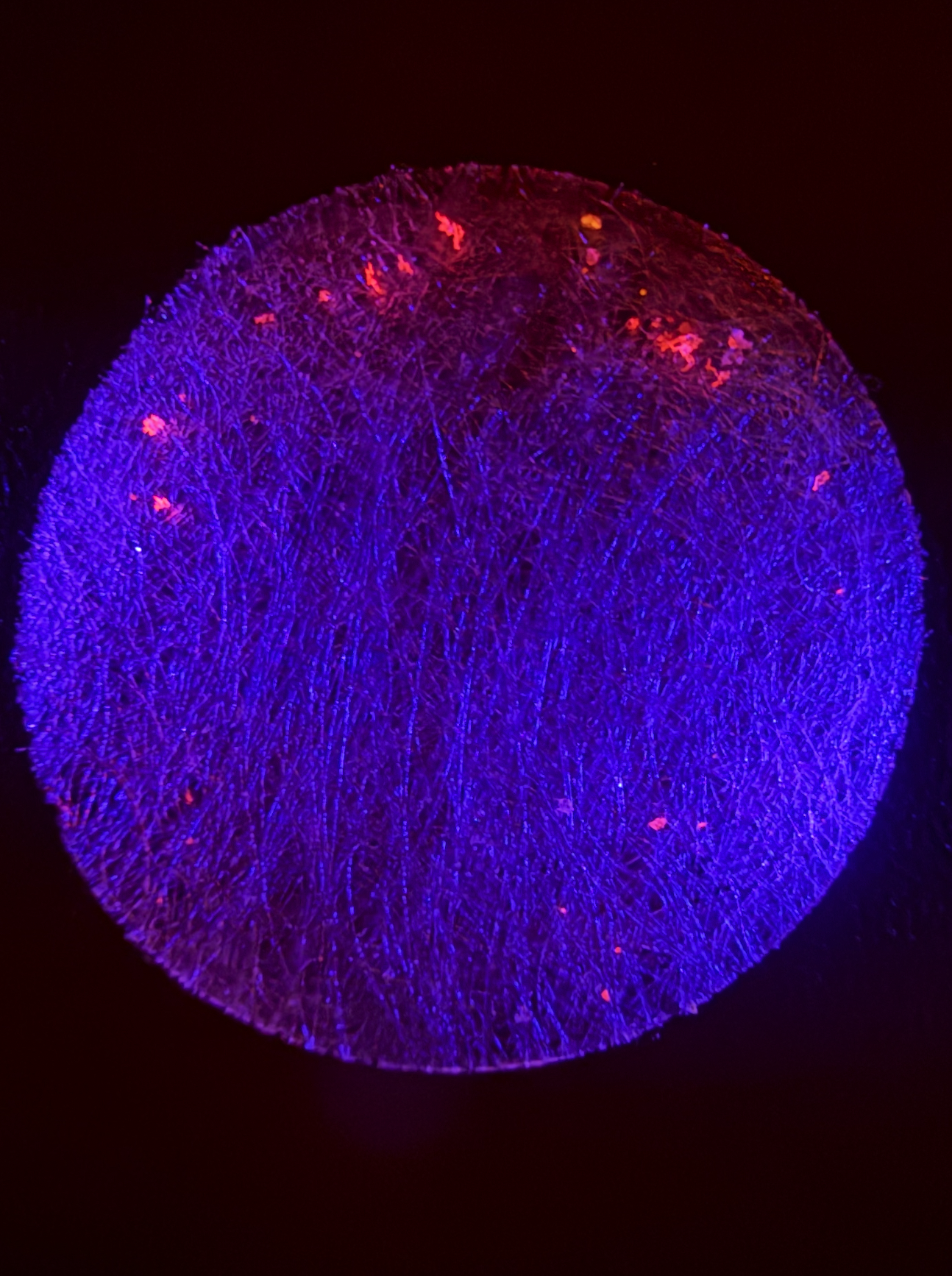
A real in-home test result. Run it on your filter's output to see what it's actually catching.
Per-filter teardowns
- Does reverse osmosis remove microplastics →
- Does Brita remove microplastics →
- Does PUR remove microplastics →
- Does ZeroWater remove microplastics →
- Does Berkey remove microplastics →
Common questions
What water filter actually removes microplastics?
Reverse osmosis (pore size around 0.0001 µm) and ultrafiltration (around 0.01 µm) are the consistent removers — the pores are physically smaller than the particles. A tight carbon block helps depending on its pore rating. Standard activated-carbon pitchers (Brita, PUR, ZeroWater) are inconsistent and not certified for microplastic removal.
Does Brita or PUR remove microplastics?
Neither is NSF-certified for it. Both use activated carbon, which can trap some larger particles on the first passes through the bed, but a 2022 comparative study (Pivokonsky et al.) found granular activated carbon less effective than tighter membranes. Full breakdowns: does Brita remove microplastics and does PUR remove microplastics.
Is ZeroWater any better than Brita for microplastics?
ZeroWater's 5-stage filter is tighter than a basic carbon pitcher, but the company doesn't publish a pore size for the stage that would matter and carries no NSF certification for microplastics either. Full breakdown: does ZeroWater remove microplastics.
Does a Berkey actually remove microplastics?
Berkey claims >99.9% removal on a long list of contaminants from internal lab testing, but independent third-party verification specific to microplastics is thin. Treat it as a strong claim, not a certified one, until you test your own. Full breakdown: does Berkey remove microplastics.
Is reverse osmosis worth it just for microplastics?
If microplastics are the only reason, it's the most expensive way to solve it — but it's also the one filter type that removes them by physics rather than by claim. The membrane's pores are about 10,000x smaller than the smallest microplastic. Full breakdown: does reverse osmosis remove microplastics.
How do I know if my specific filter is working?
Test it. Fill one 100 mL sample from the unfiltered tap and a second from your filter's output, run both through an in-home microplastics kit, and compare the two filter discs side by side. Manufacturer certifications tell you what a filter is built for — they don't tell you what your unit, at your filter age, is actually doing today.
Related