Filter Review · April 17, 2026
Does Brita remove microplastics?
Short answer: the standard Brita pitcher is not certified to remove microplastics. It's certified (NSF 42 and NSF 53) for chlorine taste, mercury, cadmium, copper, zinc, and a few other contaminants. Microplastics aren't on the list. That doesn't mean the pitcher removes zero particles — it means there's no third-party testing claiming it removes them reliably. Here's what we know, and how to test your specific pitcher.
What Brita is actually certified for
The standard Brita pitcher uses an activated carbon + ion-exchange resin filter. The NSF certifications list: chlorine taste and odor (NSF 42), mercury, cadmium, copper, zinc, and a few pharmaceutical contaminants (NSF 53). No certification for particulate matter at microplastic sizes. No claim on PFAS either.
Brita's newer “Elite” filter (previously “Longlast”) adds lead reduction and a slightly denser carbon block, but also doesn't carry a microplastics certification.
What the independent research shows
Activated carbon pitchers can physically trap some larger microplastic particles in the carbon bed, especially on the first few passes. But results are inconsistent and highly dependent on flow rate, filter age, and filter saturation. A 2022 comparative study (Pivokonsky et al.) found granular activated carbon was less effective at microplastic removal than tighter membrane filters (ultrafiltration, reverse osmosis).
A Brita pitcher is better than no filter. It is not a dedicated microplastic solution.
What actually removes microplastics
| Filter type | Microplastic removal | Typical cost |
|---|---|---|
| Reverse Osmosis | Excellent — pore size ~0.0001 µm | $150–$400 under-sink |
| Ultrafiltration (UF) | Very good — pore size ~0.01 µm | $100–$300 |
| Carbon block (tight) | Moderate — depends on pore rating | $30–$100 |
| Brita activated carbon pitcher | Inconsistent — not certified | $20–$40 |
| Refrigerator in-line filter | Varies by brand — often minimal | $30–$60 |
Other common pitchers land in the same place: a standard ZeroWater pitcher is also not certified for microplastics, and the consistent removers are membrane systems — reverse osmosis and ultrafiltration. See the full side-by-side comparison across every filter type.
Test your own Brita
The microplastics test kit is designed for exactly this. The kit is available to order online, with tests sold separately. Fill one 100 mL sample from your tap, fill the second from the Brita spout. Run both through the kit. The filter discs side by side will tell you if your Brita is catching anything or not.
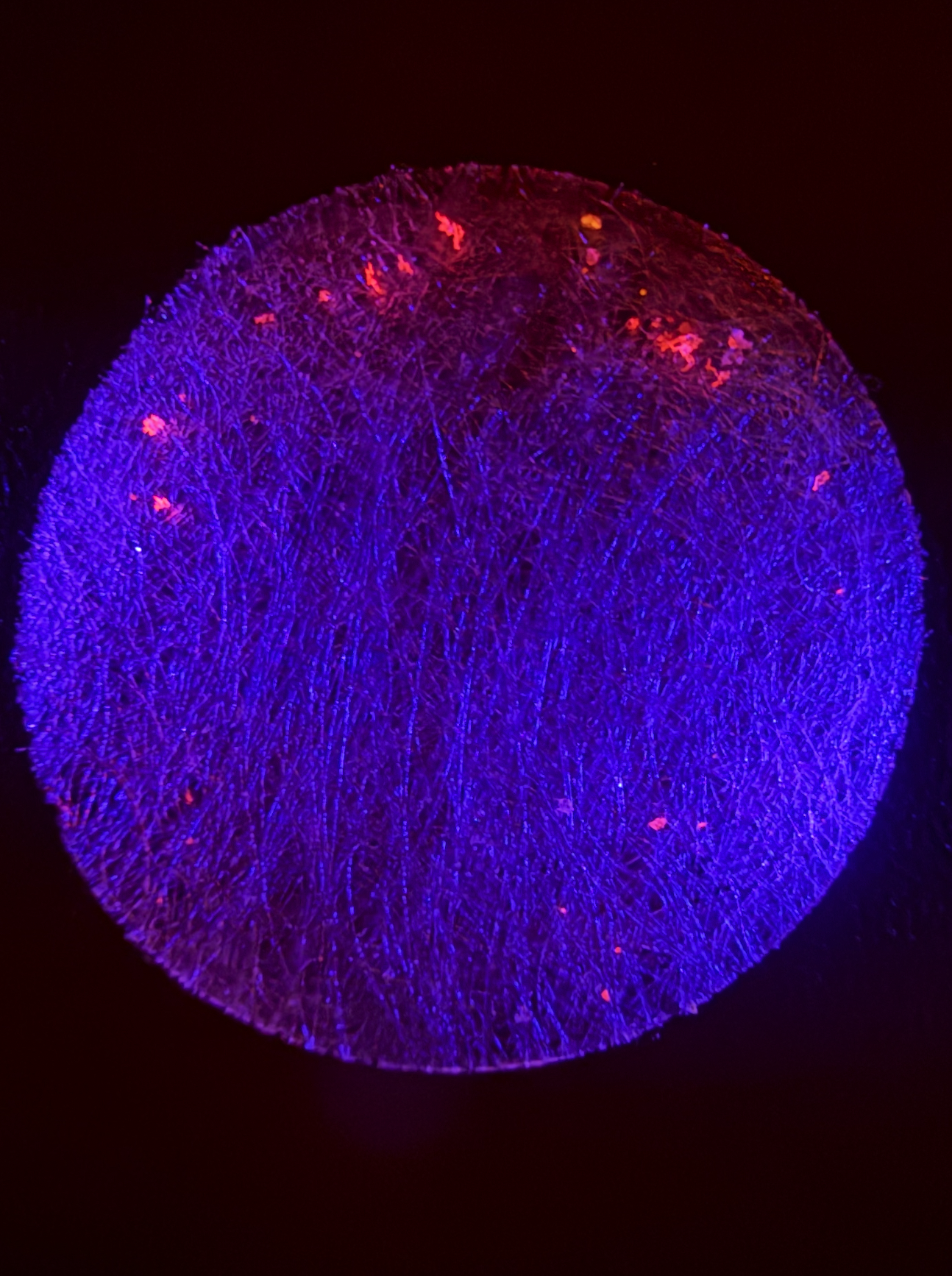
A real in-home test result. The kit shows you what your filter is catching — and what it isn't.
Running this before/after comparison is the single most useful test the kit does. Most Brita owners have never actually verified the filter is doing what they hope it's doing. The microplastic test kit for filtered water walks through the same input/output protocol for a pitcher, a fridge dispenser, or an RO system. See more real before/after filter results from other customers in our microplastic test kit reviews.
Common questions about Brita and microplastics
Does Brita filter out microplastics?
Not in any certified sense. Brita's NSF 42 and NSF 53 certifications cover chlorine taste and odor, mercury, cadmium, copper, zinc, and a few pharmaceuticals — microplastics aren't on the list. The activated carbon bed can physically trap some of the largest particles, but there's no third-party testing that claims Brita removes microplastics reliably.
Does Brita reduce microplastics?
It may catch some of the largest particles on the first passes through the carbon bed, but any reduction is inconsistent and drops as the filter saturates with use. A 2022 comparative study (Pivokonsky et al.) found granular activated carbon less effective at microplastic removal than tighter membranes like ultrafiltration or reverse osmosis. Treat any reduction as incidental, not certified.
Does the Brita filter remove microplastics?
The standard activated-carbon pitcher filter is not certified to remove microplastics. It's built and tested for chlorine taste, metals, and a few other contaminants — not particulate matter at microplastic sizes.
Does the Brita Elite (Longlast) filter remove microplastics?
No. The Elite filter — previously branded Longlast — adds lead reduction and a slightly denser carbon block, but it still carries no microplastics certification.
What water filter actually removes microplastics?
Reverse osmosis (pore size around 0.0001 µm) and ultrafiltration (around 0.01 µm) are the consistent removers. A tight carbon block helps depending on its pore rating. A standard Brita activated-carbon pitcher is inconsistent and uncertified for this.
How can I tell if my Brita is removing microplastics?
Run a before/after test. Fill one 100 mL sample from the cold tap and a second from the Brita spout, run both through an in-home microplastics kit, and compare the two filter discs side by side. That's the only way to see whether your specific pitcher is catching anything.
Related