Filter Review · April 17, 2026
Does the Berkey filter remove microplastics?
Short answer: Berkey claims >99.9% microplastic removal, but that number comes from the company's own in-house testing, not independent certification. The physics of the Black Berkey element — a dense carbon block with a reported pore size in the sub-micron range — is plausible for that claim. But Berkey's testing has historically been done in-house, and the company has had a complicated regulatory history with the EPA. Independent verification is exactly what the in-home kit is for.
What Berkey claims vs what's certified
Berkey publishes an extensive list of contaminant reductions measured in internal lab testing, including >99.9% for microplastics. The elements do not carry NSF 42, NSF 53, or NSF 401 certification. The company has argued that their testing methodology is more rigorous than NSF's, which is marketing language that every uncertified brand uses.
In 2022, the EPA initiated enforcement action against Berkey over pesticide registration for the silver-impregnated elements. The action didn't relate directly to microplastic claims, but it created sales disruptions and raised credibility questions that are still part of the brand's reputation.
Is the physical filter capable?
Black Berkey elements use a dense activated carbon block with additional proprietary media. Dense carbon blocks canphysically trap particles down to around 0.2 µm depending on manufacturing tolerances. If Berkey's pore size claims hold, the element should capture most microplastics in the 1–100 µm range — which is the majority of what's measured in drinking water.
The system is gravity-fed — water sits in the upper chamber and drips through the elements into the lower chamber. Flow rates are slow (a Big Berkey fills about 3 gallons in 2 hours), which actually favors particle capture because contact time with the carbon is longer.
Independent research
There's no large independent peer-reviewed study specific to Berkey and microplastics. Scattered third-party TDS and heavy metal tests exist with mixed results. The honest answer is: the technology is plausibly effective, but you shouldn't take the company's word alone.
Test your own Berkey
This is the exact use case the microplastics test kit was built for. The kit uses separately sold tests. One 100 mL sample from your tap, one from the Berkey spigot. If Berkey's claims hold up, the Berkey-side filter disc should come back essentially clean. If they don't, you'll see it in pink dots.
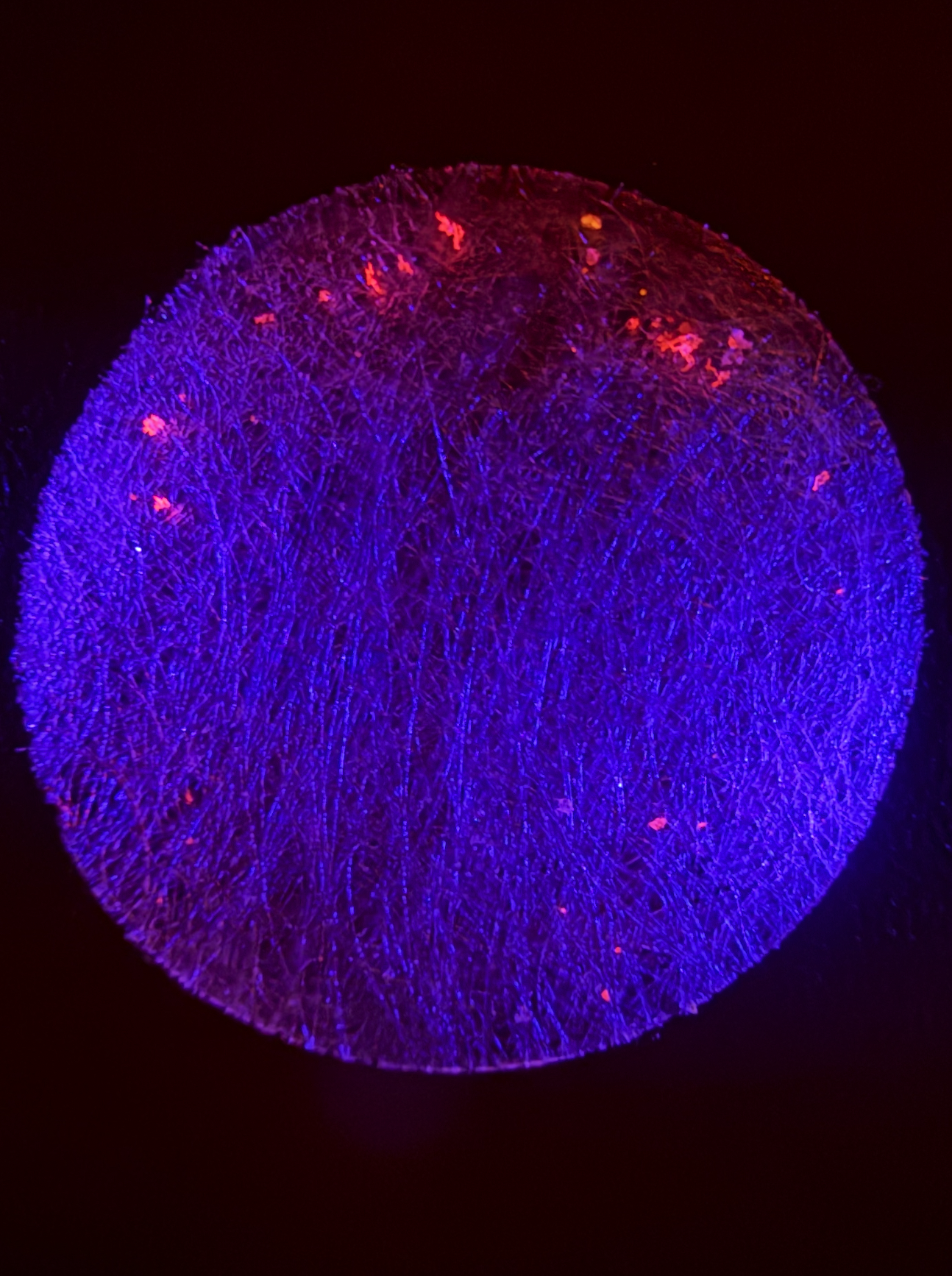
A real in-home test result. You run this on your Berkey output.
We've tested a dozen filter brands this way. Every owner is surprised by at least one of the results. The microplastic test kit for filtered water lays out the input/output protocol, and the full comparison shows how each filter class — gravity, pitcher, RO — tends to score. If you're also considering a mail-in lab panel, see TapScore vs. The Water Test for how the two approaches compare.
Common questions about Berkey and microplastics
Does Berkey filter microplastics?
Berkey claims >99.9% removal of microplastics for the Black Berkey elements, based on the company's own in-house testing. There is no independent, peer-reviewed study confirming that number. The element's dense carbon block is physically capable of trapping particles in the size range Berkey claims, but "plausible" and "independently verified" are different things.
Is the Berkey microplastics claim independently verified?
No. Berkey's contaminant-reduction numbers, including microplastics, come from testing the company commissioned itself. Black Berkey elements do not carry NSF 42, NSF 53, or NSF 401 certification, which is the closest thing to independent verification in this category.
Does the Berkey EPA issue affect the microplastics claim?
Not directly — the 2022 EPA enforcement action was about pesticide registration for the silver used in the elements, not about microplastics performance. It doesn't confirm or disprove the microplastics number either way, but it's part of why independent verification matters here.
How can I tell if my Berkey is actually removing microplastics?
Test it yourself. Fill one 100 mL sample from your unfiltered tap and a second from the Berkey spigot, run both through an in-home microplastics kit, and compare the two filter discs. That's the only way to check Berkey's claim against your own water instead of the company's internal numbers.
Related