For Schools, Science Fairs & After-School Programs
Microplastics testing for your classroom and science fair
An in-person science activity with a reusable microscope kit, plastic samples from common materials, and lesson plans for grades 3–12.
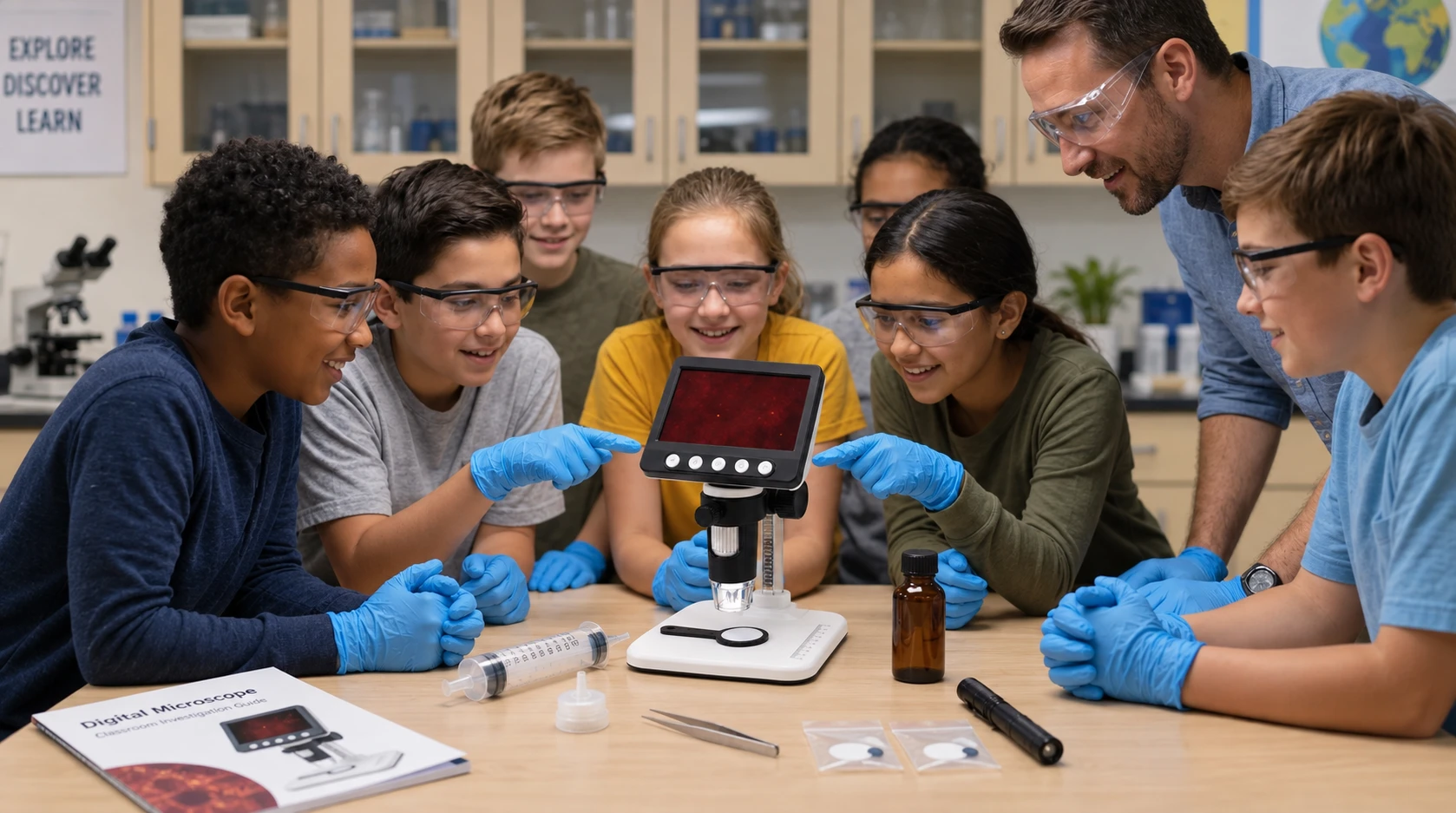
Students collect water, prepare a sample, and examine it together on the microscope screen. Worksheets guide them through recording and comparing what they see.
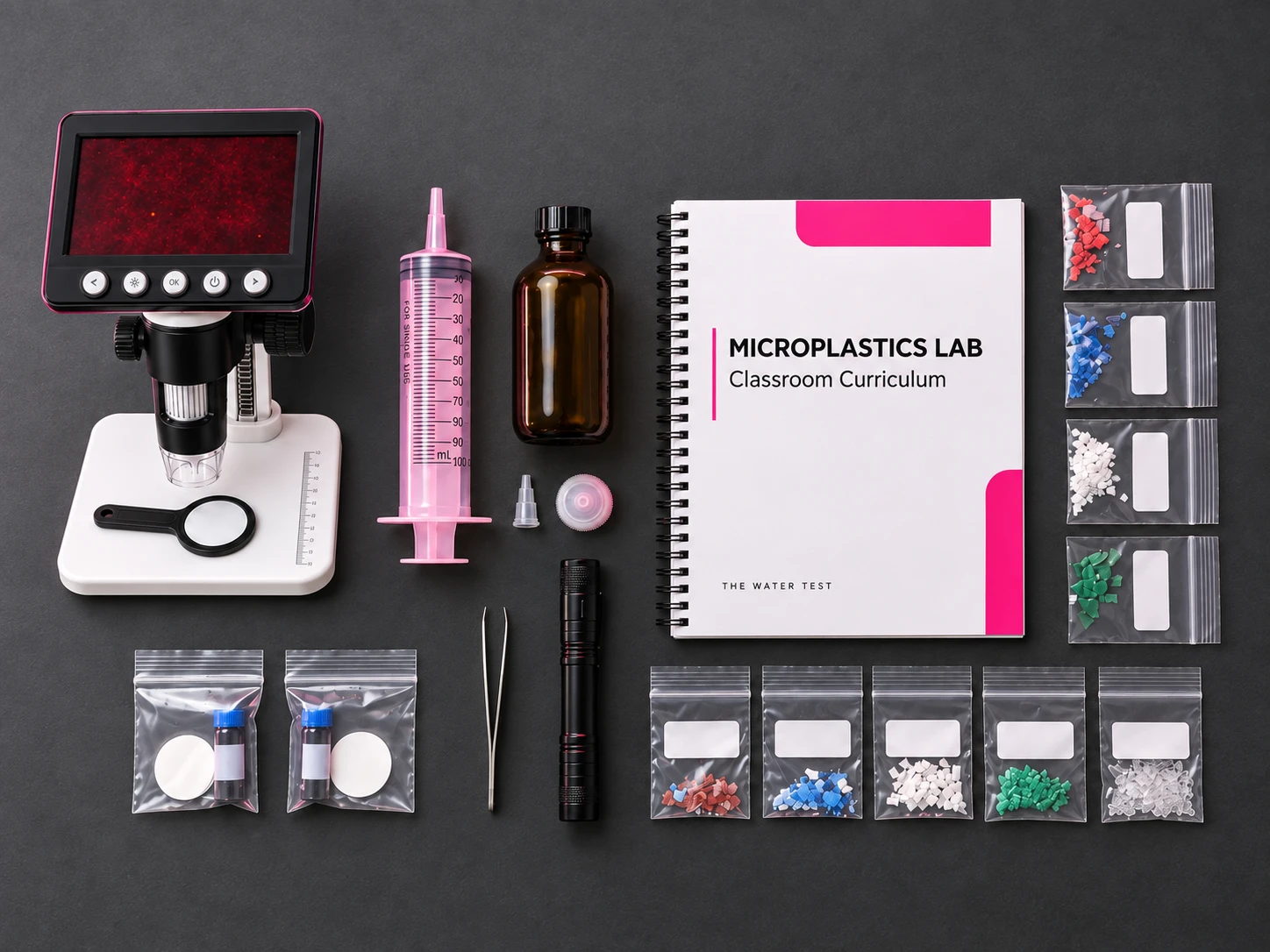
Microscope · staining vials · filters · curriculum · plastic samples
Science fair projects and classroom experiments
Compare bottled water brands, a school drinking fountain and tap water, or water before and after filtration. Students choose a question, repeat each test, and graph their observations of suspected microplastics. Use these activities for a science fair, a class investigation, a science club, or homeschool lessons.
One microscope can serve a whole project. Ten water sources tested three times need 30 tests, plus additional tests for procedural blanks and any reruns.
Plan your microplastics science fair project →What students do
Collect water
Bring a sample from a tap, drinking fountain, or water bottle.
Add the stain
Use a pre-measured staining vial and follow the lesson instructions.
Filter the sample
Push the water through a filter with the syringe to collect particles.
Look and compare
View the filter on the microscope screen. Count particles that glow and compare samples. Glowing particles indicate suspected microplastics.
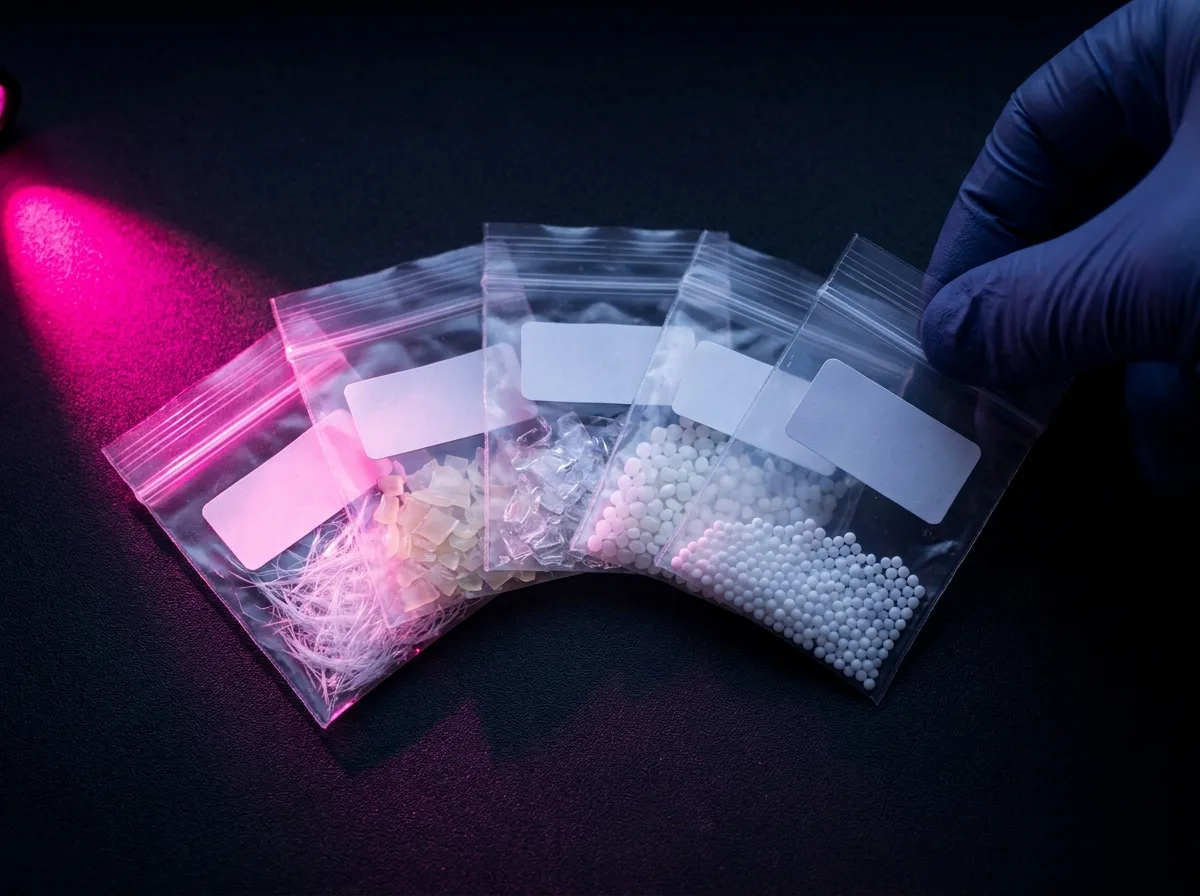
Plastic samples included
The kit includes various types of plastic from common materials. Students examine them under the microscope, see how they take up the stain, and compare them with particles from their water samples.
Lesson plans included
Each plan includes instructions, student worksheets, and a teacher answer key. Choose the activity for your grade level.
Grades 3–5
ObserveA teacher-led activity. Students describe and compare the reference samples.
Grades 6–8
InvestigateStudents compare water sources, record observations, and discuss what their results show.
Grades 9–12
AnalyzeStudents plan a comparison, analyze their results, and discuss the limits of the test.
What's in the classroom kit
Tests are sold separately. Order one staining vial and filter for each water sample.
- Reusable digital microscope with a built-in screen
- Syringe, membrane filter holder, wand, flashlight, and tweezers
- A variety of plastic samples from common materials
- Printed lesson plans, student worksheets, teacher answer key, and recording sheets
School orders
Reusable hardware is $100. Tests are $7 each, plus shipping and applicable tax. Order one test for each sample, repeat, and procedural blank.
Contact us for purchasing documents, a purchase order, or W-9. Include your grade level, project deadline, and the number of kits and tests you need.
Classroom safety
- The stain comes in pre-diluted, pre-measured vials.
- Use a ventilated room and keep away from open flames.
- Nitrile gloves and safety glasses are recommended. They are not included.
- Adult supervision required for grade 5 and below.
- Request safety data sheets before ordering for your school.
Common questions
Can students use the kit for a microplastics science fair project?
Yes. Students can compare bottled water, tap water, or water before and after filtration. Plan repeated tests, use the same sample volume, and record glowing particles as suspected microplastics. Our science fair guide explains sample counts and controls.
How much should we budget for a school project?
Reusable hardware costs $100, and tests cost $7 each, plus shipping and applicable tax. Each water sample, repeat, and procedural blank uses one test. Choose your quantities and order online. Contact us if your school requires purchasing documents.
How does a class share one kit?
Groups take turns at the microscope while others prepare samples or complete the worksheets. Use additional kits to run more stations.
Can we reuse it?
Yes. Reuse the microscope and kit hardware. Order a new test for each water sample; each test contains a staining vial and filter.
How long should we allow?
Plan for one class period. Larger groups may need more time to take turns at the microscope.
Can I see the lesson plan first?
Yes. Contact us for a sample lesson plan and tell us which grades you teach.
What do the results tell us?
The kit screens for suspected microplastics. A glowing particle does not confirm plastic or identify its polymer. The included microscope sees particles down to about 5 µm. It does not detect nanoplastics or determine whether water is safe to drink.