In-home kit · ~15 minutes
Microplastic test kit for bottled water.
The 2018 Orb Media bottled-water study found microplastics in 93% of samples across 11 brands. A 2024 PNAS paper counted ~240,000 particles per liter when measured down to the nanoplastic range. Most of those particles come off the PET bottle itself — and the in-home microplastics test kit lets you screen for them, brand by brand, in your own kitchen.
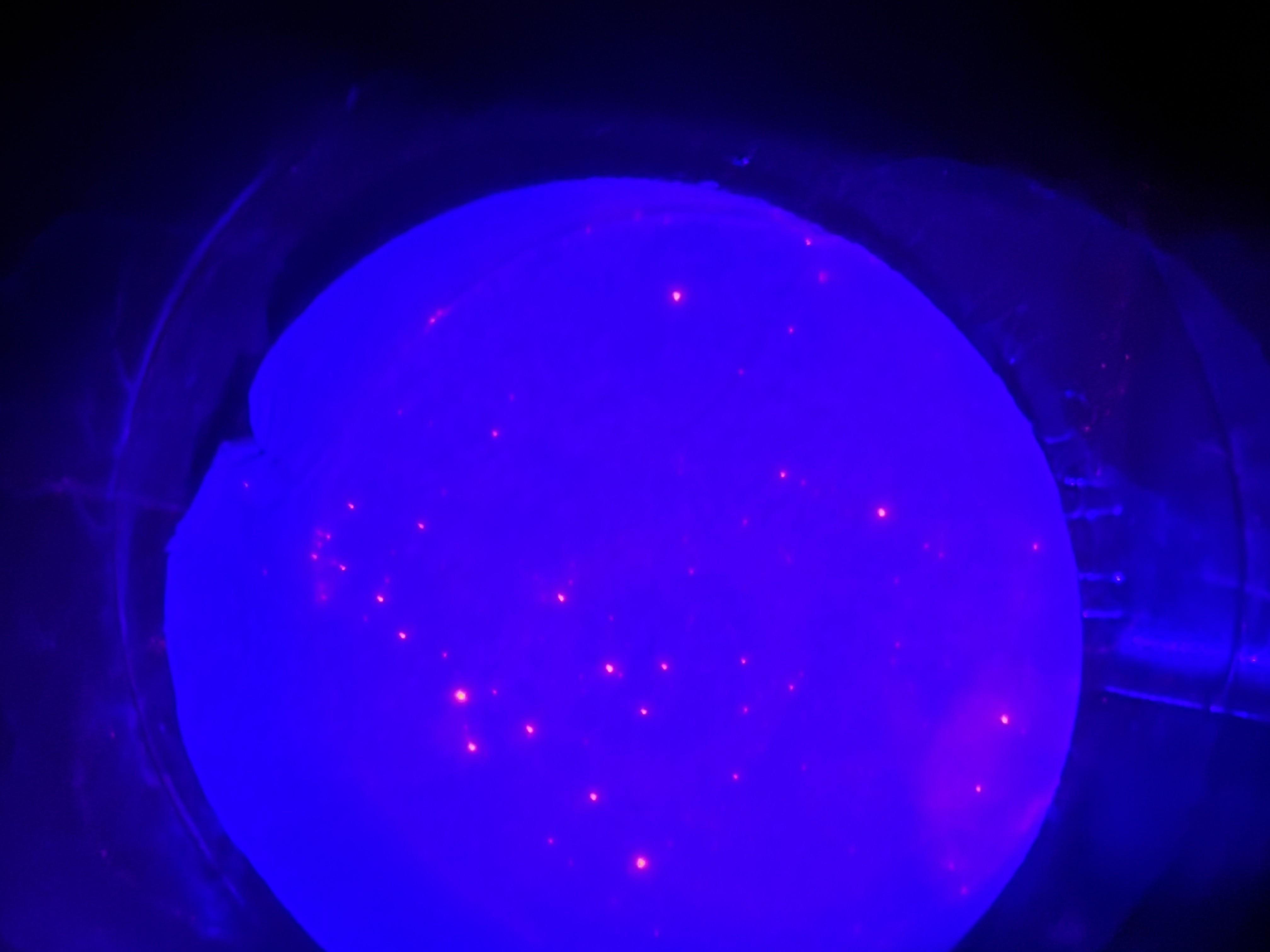
A real result: 100 mL from a SmartWater bottle that sat in a car for one year. Hard to count individual particles.
Why bottled water tests dirtier than the tap
The plastic in bottled water is almost entirely from the bottle, not the source. PET (polyethylene terephthalate) is a flexible polymer that sheds at the surface — every contact with the cap thread, every flex of the bottle wall, every degree of heat releases more particles into the water inside. By the time the bottle gets to you, it's been heated in trucks, compressed on pallets, and exposed to UV for weeks.
The Orb Media / SUNY Fredonia study tested 259 bottles from 11 brands across nine countries. 93% contained microplastic particles; the highest single sample had 10,390 particles per liter. Across the major US brands tested — Aquafina, Dasani, Evian, Fiji, Nestlé Pure Life, San Pellegrino — none were clean. Premium source water bottled in PET still tests dirty.
The 2024 PNAS study from Naixin Qian and colleagues at Columbia and Rutgers pushed resolution down to ~100nm using stimulated Raman scattering and counted ~240,000 plastic particles per liter in three US brands, with about 90% in the nanoplastic range below what any consumer kit (including ours) can resolve. Below 1 micron, particles cross cell membranes, the gut lining, and the blood-brain barrier — which is why the nano fraction is the part that matters most. Read the full breakdown of nanoplastics vs microplastics. The kit's filter captures particles down to 1 micron and the included microscope sees them down to about 5 microns; the nano load below 1 micron needs a lab (py-GC/MS, SRS microscopy, electron microscopy). A high microplastic count is a visible proxy for a far larger invisible nano load from the same bottle.
How the kit tests bottled water
Same three-step protocol as tap. Pour-volume nuance is the only thing specific to bottled water.
- 1Open the bottle. Pour 100 mL into a clean glass container. Cap-on shaking before pouring is fine — it actually releases more particles from the cap thread, which is part of what you're measuring.
- 2Drop in the Nile Red vial. Swirl. Wait 15 minutes minimum — longer is fine, and better. Binds preferentially to plastic; minerals don't take it up, though some organic matter can.
- 3Push the sample through the membrane filter. Particles down to 1 µm are trapped on the disc face.
- 4Place the filter under the included digital microscope and look. Pink dots mark particles that took up the stain — likely microplastics. You read the result yourself, live under the microscope, in minutes.
Brand tests we've already run
- How to test bottled water for microplastics — the step-by-step guide →
- Microplastics in Aquafina water →
- How many microplastics are in a Dasani water bottle? →
- Microplastics in Fiji water →
- Microplastics in Poland Spring water →
- Microplastics in SmartWater — bottle that sat in a car for a year →
FAQ
Can a home microplastic test kit detect particles in bottled water?
Yes — and the count is usually higher than the tap. The 2018 Orb Media / SUNY Fredonia study found microplastics in 93% of bottled water samples across 11 brands, averaging 325 particles per liter (max ~10,000). Most of the plastic comes off the PET bottle wall and the cap, not the source water. The in-home kit uses the same Nile Red staining method on a 100 mL pour; the included microscope sees particles down to about 5 µm.
Does premium or spring water have fewer microplastics?
No. Premium source (Fiji, Evian, Mountain Valley) doesn't fix the shedding problem because the plastic is mostly from the bottle, not the water. The 2018 study tested Fiji and found particles. A 2024 Columbia/Rutgers PNAS paper measured nanoplastics in three US bottled brands at ~240,000 particles per liter — including premium options.
What about nanoplastics in bottled water — can the kit count those?
No, and no consumer kit can. The 2024 Columbia study (Qian et al., PNAS) used stimulated Raman scattering to count ~240,000 plastic particles per liter in bottled water, with about 90% of them nanoplastics smaller than 1 micron — 10 to 100 times higher than older microplastic-only counts. Particles that small cross cell membranes, the gut lining, and the blood-brain barrier, which is what makes them the part scientists worry about most. They are below any optical method and require a lab (py-GC/MS, SRS microscopy, or electron microscopy). The kit's filter captures particles down to 1 micron, and the included microscope sees them down to about 5 microns. Treat that visible count as a proxy: a high microplastic count means a far larger invisible nano load from the same bottle. See microplastics and nanoplastics for the full picture.
Does temperature or storage make bottled water worse?
Significantly. Heat and time accelerate polymer release. A bottle that sat in a hot car for a year sheds vastly more plastic than one off a refrigerated shelf. Our SmartWater test on a year-in-a-car bottle came back so loaded it was difficult to count individual particles.
How do I run the test on bottled water specifically?
Uncap the bottle, pour 100 mL into a clean glass container. Drop in the Nile Red vial, wait 15 minutes minimum (longer is fine, and better), push the sample through the syringe filter, then look at the filter under the digital microscope. Particles that took up the stain glow bright pink and are counted as likely microplastics — a screening count you read the result yourself, live under the microscope, in minutes.
Should I switch back to tap after testing bottled water?
That's your call — but test both before you decide. The interesting comparison is your specific tap versus your specific brand of bottled. People are often surprised the bottled water they thought was 'cleaner' has 10–100x more particles than their tap. Two tests run that A/B in one sitting; test refills are sold separately.