Brand Test · April 17, 2026
Microplastics in Aquafina water: what the research shows.
Aquafina is PepsiCo's purified-water brand. Like Dasani, it's municipal tap water run through reverse osmosis, remineralized, and packaged in PET plastic. The 2018 SUNY-Fredonia/Orb Media study that tested 259 bottles across 11 major brands — Aquafina among them — found microplastics in 93% of all samples. Aquafina in that study had one of the higher average particle counts.
The numbers
In the 2018 study, Aquafina samples averaged hundreds of microplastic particles per liter. Across all 11 tested brands the combined average was 325 particles per liter, with Aquafina above the mean. PepsiCo's public response at the time was that the study's methodology was flawed; the researchers (led by Dr. Sherri Mason) stood behind the finding.
The follow-up 2024 Columbia study using Raman spectroscopy pushed the detected count to ~240,000 nanoplastic particles per liter across tested PET bottled-water brands. The older methods could only see bigger particles; newer methods see smaller ones.
The plastic is from the bottle, not the water
Aquafina's reverse osmosis process removes most particulates from the source water. The plastic shows up because the water is then sealed in a PET bottle that sheds microscopic particles under heat, compression, UV exposure, and time. Bottles that sit on warehouse shelves for months accumulate more shed plastic than bottles fresh off the line.
Test your own bottle
You can run the test yourself in about 15 minutes on your table. The microplastic test kit for bottled water stains a 100 mL sample with Nile Red, filters out the particles, and shows stained particles — likely microplastics — as bright pink dots under the included digital microscope. The kit uses separately sold tests. Run one on Aquafina and one on your tap water for a clean comparison. New to this method — see what a microplastic test kit is and how it works.
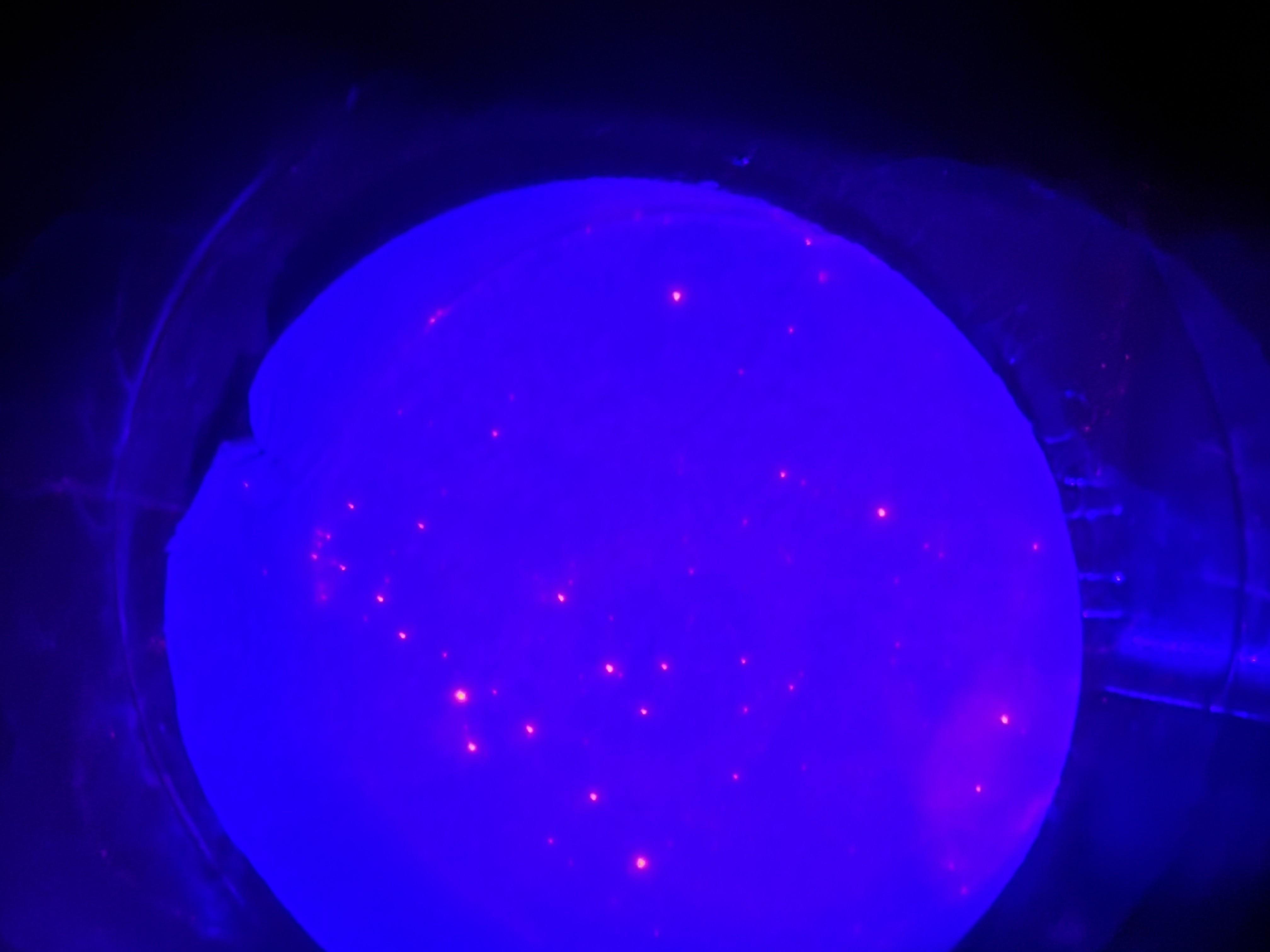
Real customer result from a plastic-bottled water sample.
If you want to reduce exposure
- Switch to filtered tap at home. RO pitchers ($40–$150) or under-sink RO systems reduce microplastics substantially.
- Avoid hot cars and direct sunlight — both accelerate PET shedding.
- Use glass or stainless reusable bottles instead of refilling PET bottles.
- Rotate your supply — don't stockpile cases that sit for months before you drink them.
Related