Research · April 17, 2026
Microplastics in breast milk — what the 2022 study actually found.
A team led by Dr. Antonio Ragusa at the Fatebenefratelli Hospital in Rome published the first study looking for microplastics in human breast milk in 2022 (Polymers). They found plastic in 75% of the 34 samples tested. Polyethylene, polyvinyl chloride, and polypropylene — the most common consumer plastics. This post covers what was found, how it likely got there, and what any of this means for you.
What they found
34 breast milk samples from healthy mothers a week after birth. 26 of those samples had detectable microplastic particles. The particles ranged from 2 to 12 µm — small, but well within the size range detected by standard research methods.
The three polymers identified were polyethylene (used in packaging and bags), polyvinyl chloride (PVC — pipes, flooring, food packaging), and polypropylene (food containers, yogurt cups, bottle caps, and — notably — most baby bottles).
The researchers also collected dietary and lifestyle data. They found no strong correlation between the presence of microplastics and any specific consumption pattern. Translation: plastic exposure is environmental and pervasive enough that you can't easily pin it to one food or one habit.
How it likely got there
Microplastics have now been detected in human blood (Leslie et al., 2022), placentas (Ragusa et al., 2021), lungs (Jenner et al., 2022), and hearts (Yang et al., 2023). Once particles are in circulation, they get distributed through body tissue — including mammary tissue, which is how they end up in milk.
The most common exposure pathways are drinking water, bottled water, food packaging, airborne microfibers from synthetic textiles, and food containers. The Columbia University study (Qian et al., 2024) found an average of 240,000 nanoplastic particles per liter in bottled water. If you drink bottled water daily, the math adds up fast.
What still isn't known
The critical unknown is whether microplastic exposure at environmental levels causes measurable harm in humans — and specifically whether transfer through breast milk has health consequences for infants. The $144M HHS STOMP initiative launched in April 2026 is specifically designed to answer these questions.
Breastfeeding is still, by every available piece of evidence, the best nutrition source for infants. The Ragusa paper is explicit that its findings do not change that recommendation. The question is how to reduce environmental plastic exposure in general, not whether to breastfeed.
What you can actually do
You can't test your own breast milk without a lab microscope and specialized chemistry. What you can test is the inputs — the water you're drinking, the filter you're relying on, the bottle you're using, the tea you brew every morning. Those are the sources you have control over.
- Switch from bottled water to filtered tap if you drink bottled. Columbia's 240,000 particles/liter number is hard to beat any other way.
- Test whether your filter is actually working. Reverse osmosis reduces microplastics substantially. Pitcher filters vary wildly by brand.
- Swap polypropylene storage containers for glass. Heat + plastic = shedding. Any container that touches hot liquid should be glass.
- Avoid plastic tea bags. Pyramid mesh bags are nylon or PET. A single brewed bag can release ~11 billion microplastic particles per cup (McGill, 2019).
Our in-home microplastics test kit uses separately sold tests. A natural pair: one sample from your tap, one from your bottled water or filter output. You'll see the difference on the filter disc within 15 minutes.
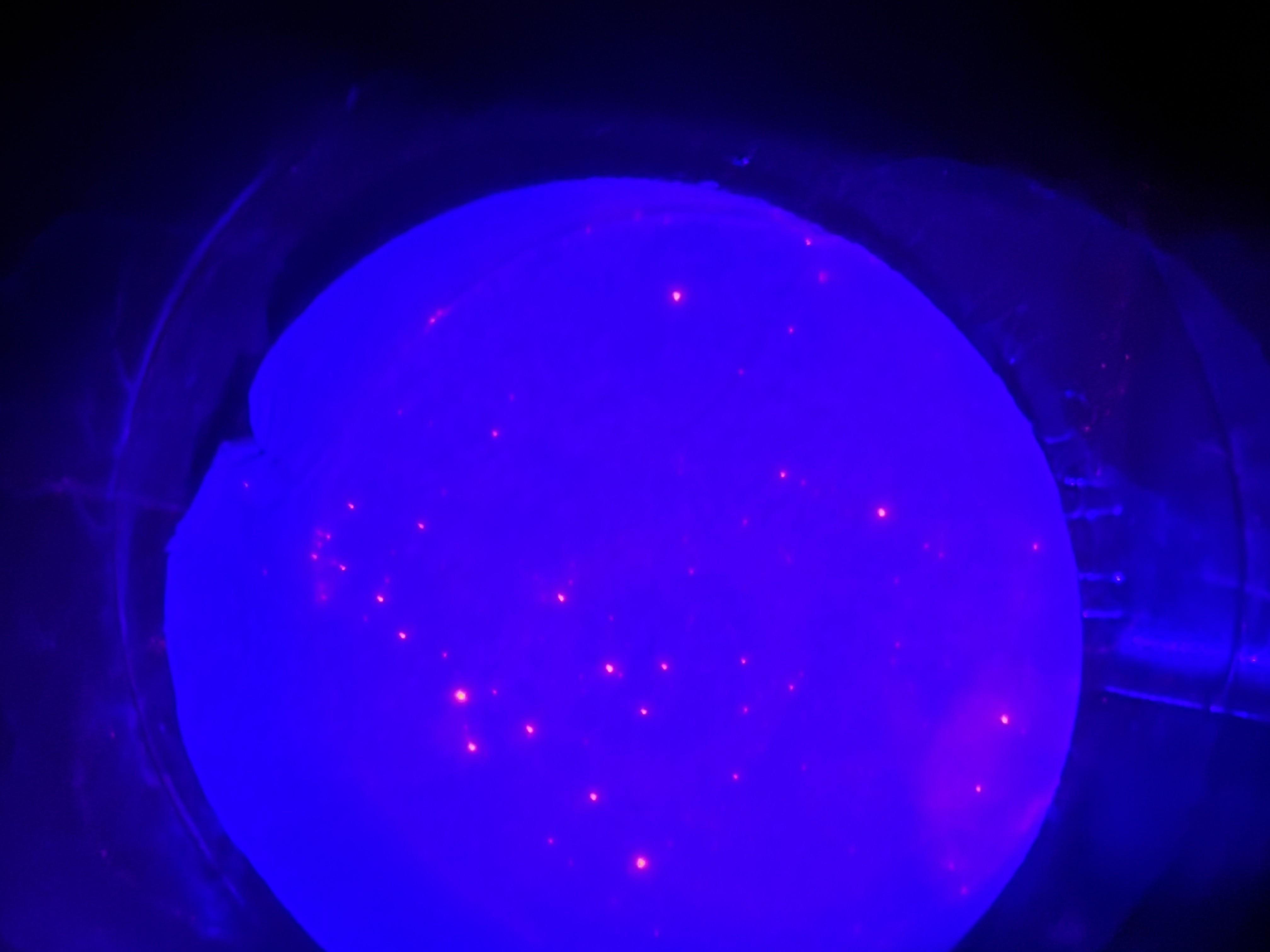
Real customer result: one-year-old plastic water bottle.
Related