Research · April 17, 2026
Microplastics in baby formula: what the research says, and how to test your own bottle.
A 2020 Trinity College Dublin study found that preparing formula in polypropylene baby bottles — the standard kind most parents use — releases an average of 16.2 million microplastic particles per liter. Not per year. Per liter. The hotter the water, the more plastic sheds. A 12-month-old drinking ~1 liter of bottle-prep formula a day is consuming roughly 1.6 million particles per day, according to that study.
What the research actually found
The Trinity College Dublin team (Li, Shi, Wang, Boland, Nature Food, 2020) followed WHO-recommended formula preparation guidelines: sterilize the bottle, mix with 70°C water, shake. They then filtered the prepared formula and counted plastic particles.
Across 48 tested bottles from 10 brands, the daily exposure estimate for infants ranged from 14,500 to 4.5 million particles per day depending on region. Hotter water = more shedding. Longer sterilization = more shedding. Vigorous shaking = more shedding. None of those variables are optional under WHO prep guidelines.
A follow-up 2023 review in Environmental Research replicated the finding across different bottle types. Polypropylene sheds the most. Glass and silicone shed essentially none.
What's still unclear
Whether this level of exposure causes measurable harm in humans is unknown. The HHS STOMP initiative launched in April 2026 with $144M in federal research funding specifically to answer health questions like this. Expect hard data over the next three to five years.
What is known: microplastics have been detected in human placentas (Ragusa et al., 2021), breast milk (Ragusa et al., 2022), and infant stool at ten times the concentration of adult stool (Zhang et al., 2021). Infants are getting exposed. The pathway is the question; the presence is not.
What you can do today
Three steps that actually reduce exposure, ranked by impact:
- Switch bottles to glass or medical-grade silicone. This is the single biggest lever. Polypropylene is the shedding bottle. Glass and silicone are not. Dr. Brown's, Philips Avent, and Nuk all sell glass versions.
- Prepare formula in a non-plastic container, then transfer. If you can't switch bottles, at least mix formula in a glass measuring cup with hot water, let it cool, then transfer to the bottle. Most of the shedding happens during hot-water mixing, not during feeding.
- Don't microwave formula in a plastic bottle. Heat accelerates shedding dramatically. This is the most controllable single variable.
How to test your own bottle
The research above is on 48 bottles from 10 brands. Your bottle isn't one of them. The microplastics test kit lets you run the same type of measurement on the bottle you actually use. Prepare formula the way you normally prepare it. Filter 100 mL of the prepared formula through the kit's syringe filter. Stain with Nile Red. Look at the filter under the digital microscope.
You'll see the particles under the microscope. You can compare before/after switching to a glass bottle. That is the only way to know what's in your specific bottle, with your specific prep routine, at your specific water temperature.
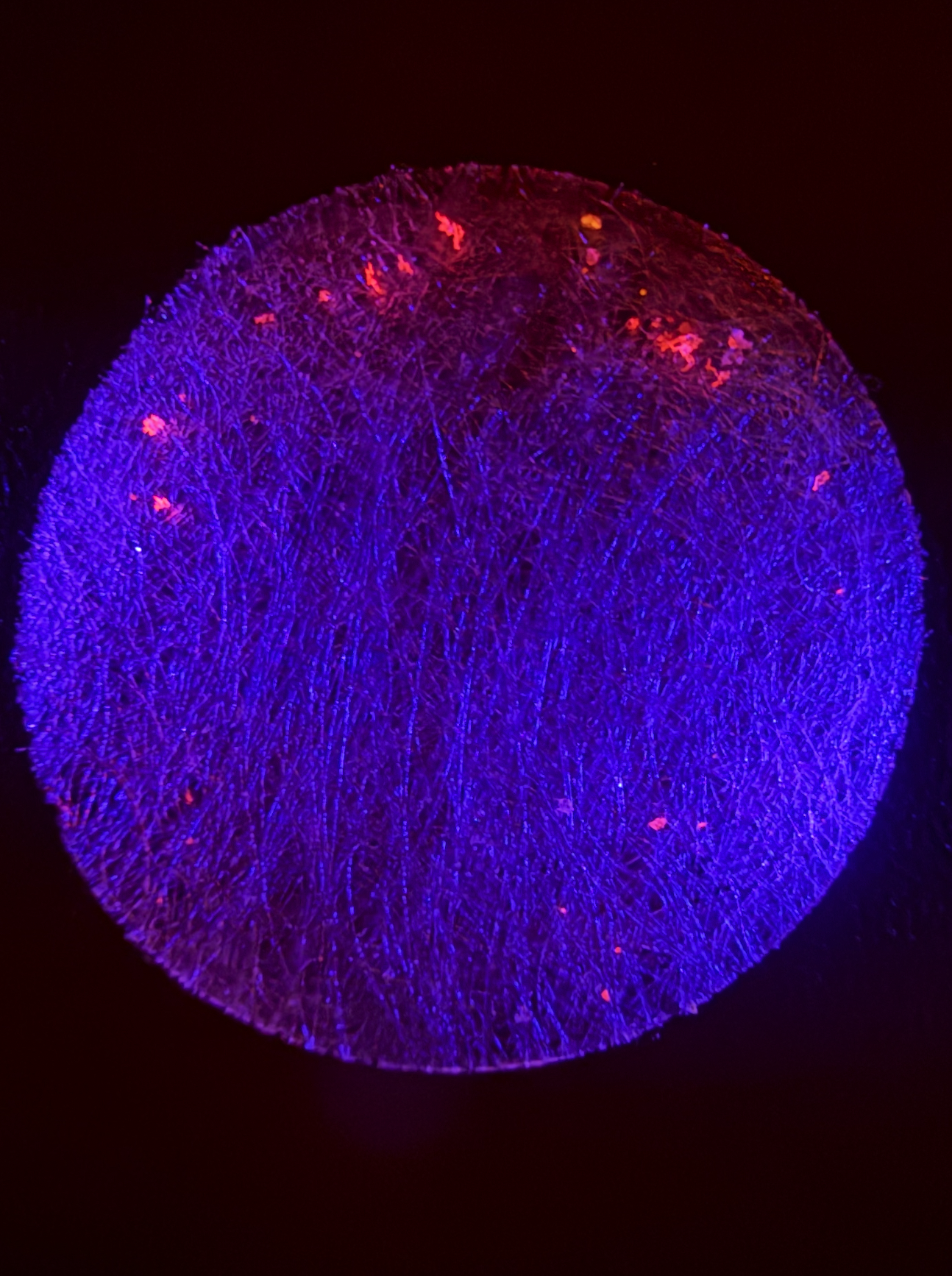
A real customer result. Each pink dot is a stained particle — likely microplastic.
The kit uses separately sold tests. Run one on tap water, one on prepared formula. Compare.
Related