Guide · April 17, 2026
How to test your water for microplastics at home
Testing water for microplastics used to mean one of three things: mailing a sample to a $600 lab, buying a $2,000 microscope, or writing a grant proposal. A fourth option exists now: an in-home kit with two tests, on your own table, in about 15 minutes. Here's exactly how it works.
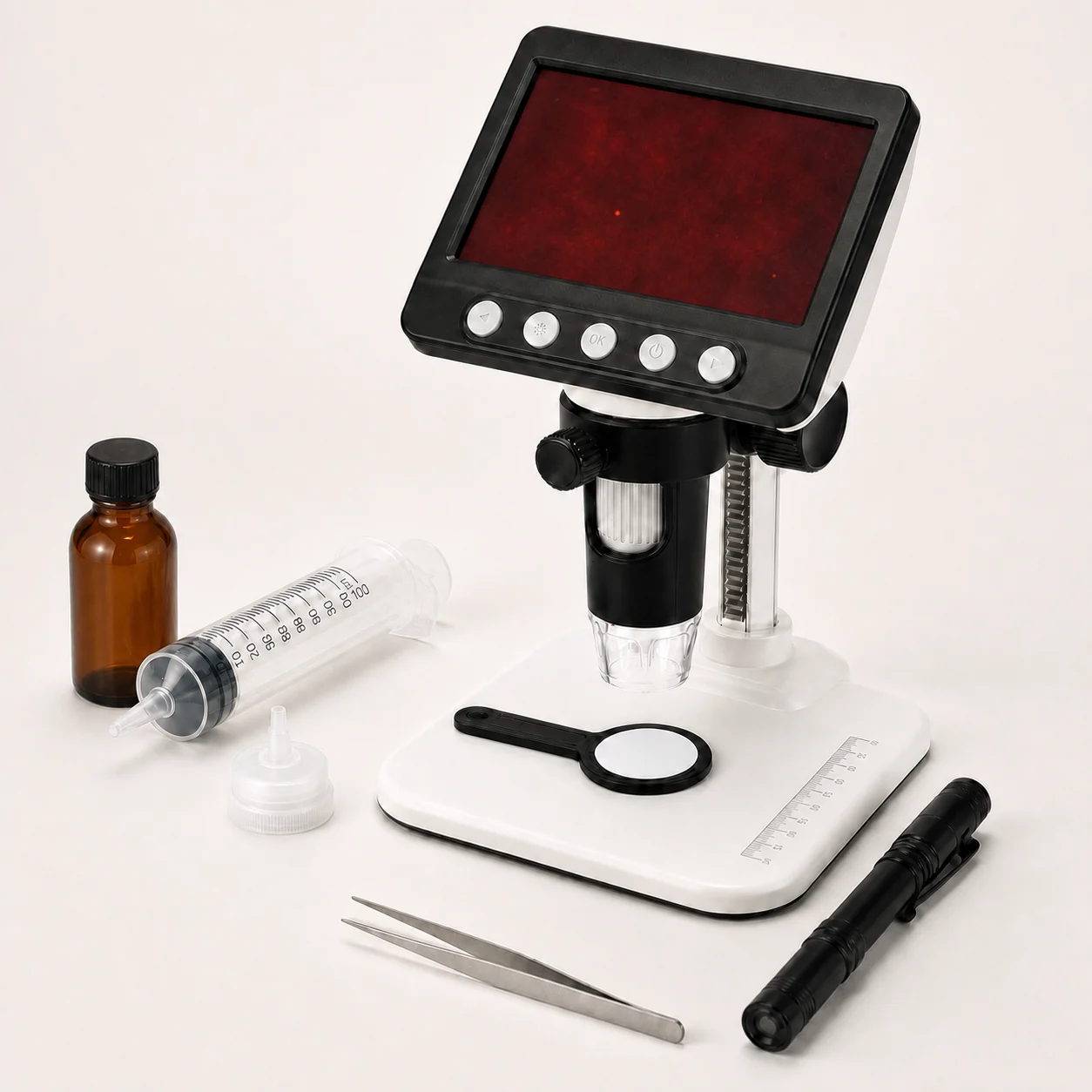
Reusable hardware: digital microscope, syringe, membrane filter holder, wand, tweezers, flashlight, and amber vial. Tests are sold separately.
The three ways to test water for microplastics
| Method | Cost | Turnaround |
|---|---|---|
| Mail-in lab test | $598–$835 | 2–4 weeks |
| DIY with microscope + lab supplies | $2,000+ in equipment | Hours to build, specialized chemistry knowledge |
| In-home Nile Red kit | at-home kit + separately sold tests | ~15 min, start to finish |
This guide covers the third option — the one that actually works for a normal person. The chemistry is the same chemistry a university lab would use. We just moved it to your table.
What you need to test water for microplastics at home
- A 100 mL water sample. Tap, bottled, filtered, tea, coffee — anything you can pour.
- Nile Red fluorescent dye. Binds preferentially to plastic polymers; some organic matter can also take it up.
- A 25mm syringe filter (1.0 µm). Traps stained plastic particles on the disc face.
- The included digital microscope. Magnifies the filter disc so stained particles show up bright pink. It sees particles down to about 5 µm.
- A filter wand and flashlight. Hold the membrane flat beneath the tabletop microscope and illuminate it for a live read on the built-in screen.
All of the above comes pre-measured in a single kit from The Water Test (tests sold separately). You can source each ingredient separately if you want — 1 µm syringe filters run $3–$5 each, Nile Red stock is ~$40 for enough to do hundreds of tests, a basic digital microscope is $30–$50. You'll still need to mix the dilutions, which is fiddly (see our methodology page — we iterated for weeks to get the staining right). If you'd rather compare pre-built options first, see our roundup of the best microplastic test kits.
The 4 steps, in order
Pour 100 mL of your sample into the viewing cup
Measure matters. Too little sample and you miss particles. Too much and you overload the filter. 100 mL is the calibrated dose.
Add the Nile Red vial. Swirl. Wait at least 15 minutes.
The dye needs time to bind to the plastic particles in the sample. Nile Red is hydrophobic — it sticks to plastic (also hydrophobic) and is repelled by water. Fifteen minutes is the minimum; longer is fine and actually better. Wait time is the most skipped step and the most important one. Don't rush it.
Push the entire sample through the syringe filter
Fill the syringe, screw on the filter, and push the whole 100 mL through in one go. Any plastic in the sample is now trapped on the filter face.
Place the filter under the digital microscope and read the result
Particles that glow pink under the blue light are counted as likely microplastics. Some non-plastic material (certain organic matter) can also fluoresce, so the count is a screening estimate, not a lab-confirmed identification. Black plastics often don't take up the dye and show up as dark marks — count those too. Sand and sediment show up as non-glowing, textured grains and aren't counted. You interpret the result yourself, live, in minutes.
What a positive result looks like
Two real customer filters side by side:
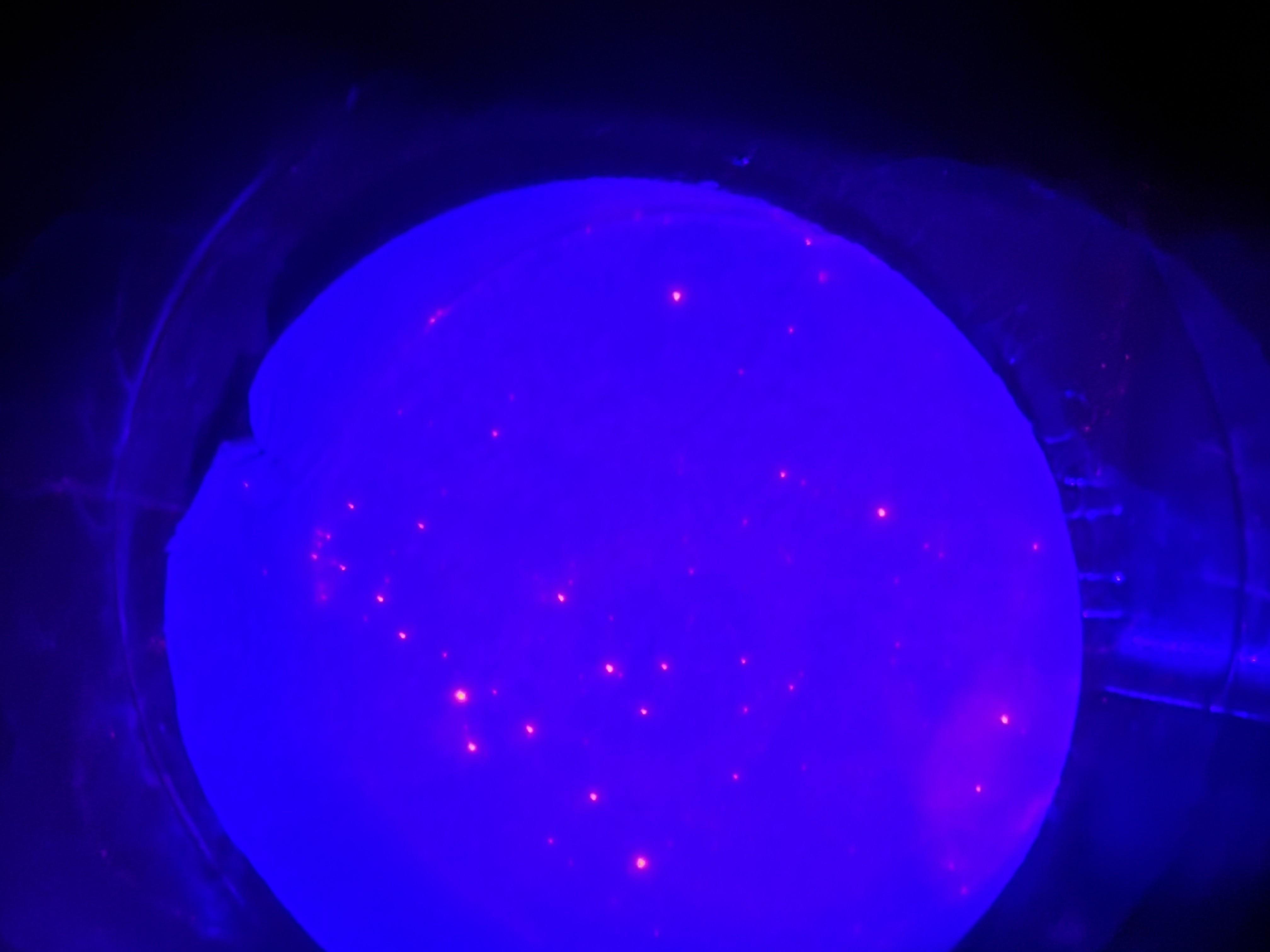
Positive: one-year-old plastic water bottle.
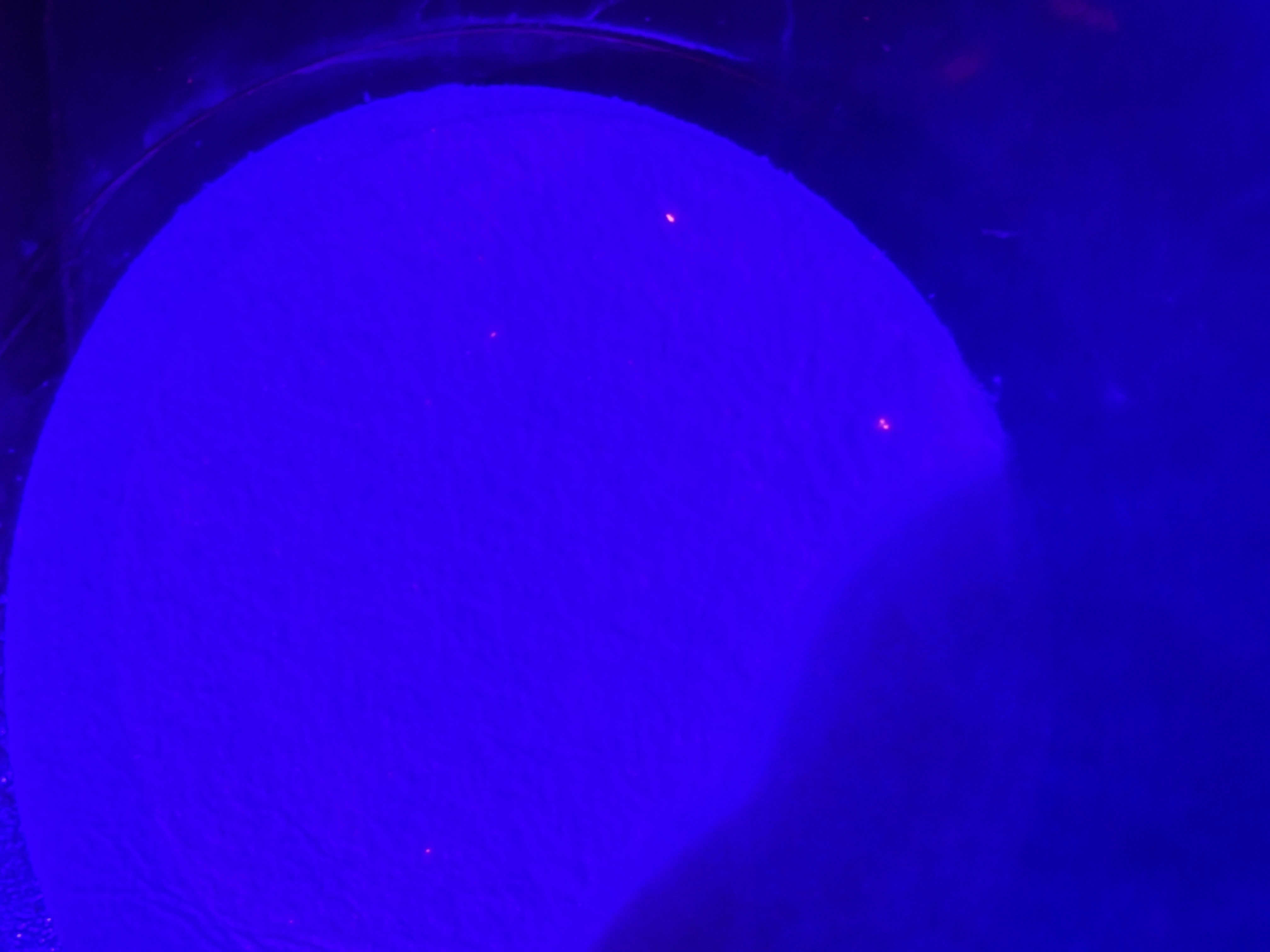
Reference baseline. Almost nothing to count.
Common mistakes
- Treating tea or cloudy water as a clean count. Tannins and other organics bind dye non-specifically. There's no digestion step in this kit, so on organic-rich samples treat the count as an upper bound.
- Testing only one sample instead of both. A side-by-side comparison — tap next to filter output, or two rooms in the house — provides more context than one count in isolation. This kit doesn't run a lab blank; the comparison is the control that fits an at-home workflow.
- Not waiting the full 15 min for staining. Plastic-dye binding takes real time. Rush it and small particles go uncounted.
- Reading the filter in a bright room. Ambient light washes out the pink fluorescence. Look at the filter under the digital microscope with the room lights down and the pink particles stand out.
- Reusing a filter disc across samples. Each test in the kit has its own filter and dye vial. Residue from a prior sample reads as extra particles in the next one — always start a new test with a fresh disc.
What this test does and does not tell you
It does: count likely plastic particles in a 100 mL sample — the filter captures down to 1 µm, and the included microscope sees particles down to about 5 µm. Give you a before/after for a filter. Compare two water sources side by side. Screen any liquid you can pour for likely microplastics.
It doesn't: identify which polymer (PE, PET, PP) — that takes py-GC/MS, a five-figure instrument. Detect nanoplastics below the filter pore size. Test for metals, PFAS, or bacteria.
It answers one question: roughly how much plastic is in this sample — as a screening estimate, not a lab confirmation. For most people, that is the question. Full rundown of what this test controls for and what it doesn't — including why it runs no lab blank — is on our limitations page.
Related