In-home kit · $75 · Results in ~15 min
Microplastics test kit — see the plastic in your water at home in 15 minutes.
See the plastic particles in your tap, filtered, or bottled water — without mailing a sample to a $600 lab. Stain, filter, look under the digital microscope. Plastic glows pink.
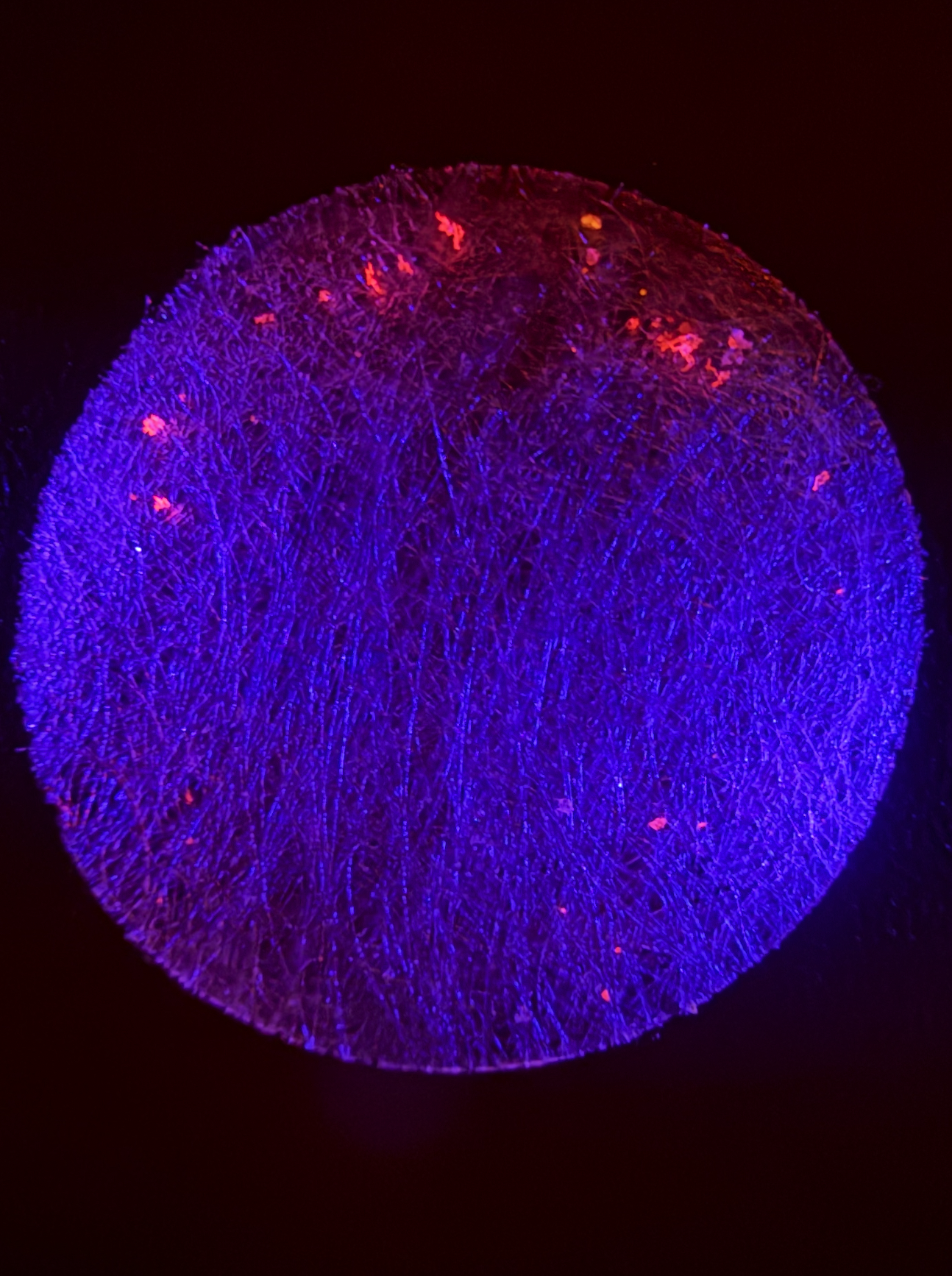
A real customer result. Each pink dot is a plastic particle stained with Nile Red.
How the microplastics test kit works
Four steps. About 15 minutes, start to finish.
01
Digest
Add the peroxide vial to a 100 mL sample. It breaks down organic matter so it can't clog the filter or fool the dye.
02
Stain
Add the Nile Red vial. The fluorescent dye binds to plastic — and not to minerals, salts, or tannins.
03
Filter
Push the whole sample through the syringe filter. Every plastic particle is trapped on the disc face.
04
Glow
Look at the filter under the digital microscope. Each pink dot is a piece of plastic — you count them yourself.
Want the full protocol? Read the methodology — the peer-reviewed Nile Red method, packaged for home use.
In-home kit vs. a mail-in lab
| This kit | Mail-in lab | |
|---|---|---|
| Price | $75 — two tests | $598–$835 per sample |
| Turnaround | ~15 minutes, on your table | 2–4 weeks mail-in |
| Where it happens | Your home, your hands | A lab you mail a sample to |
| What you get | The actual particles, in front of you | A PDF from a technician |
| Tests per purchase | Two | One per invoice |
Read the full comparison: in-home vs. lab microplastics testing
What you can test for microplastics
Curious whether your filter actually works? See what we've tested — filters and bottled-water brands, with real results.
What you'll see with the microplastic test kit
Real filters from real samples. The pink particles are plastic stained with Nile Red, seen under the digital microscope.
A real customer tap-water filter — dense pink particle load.
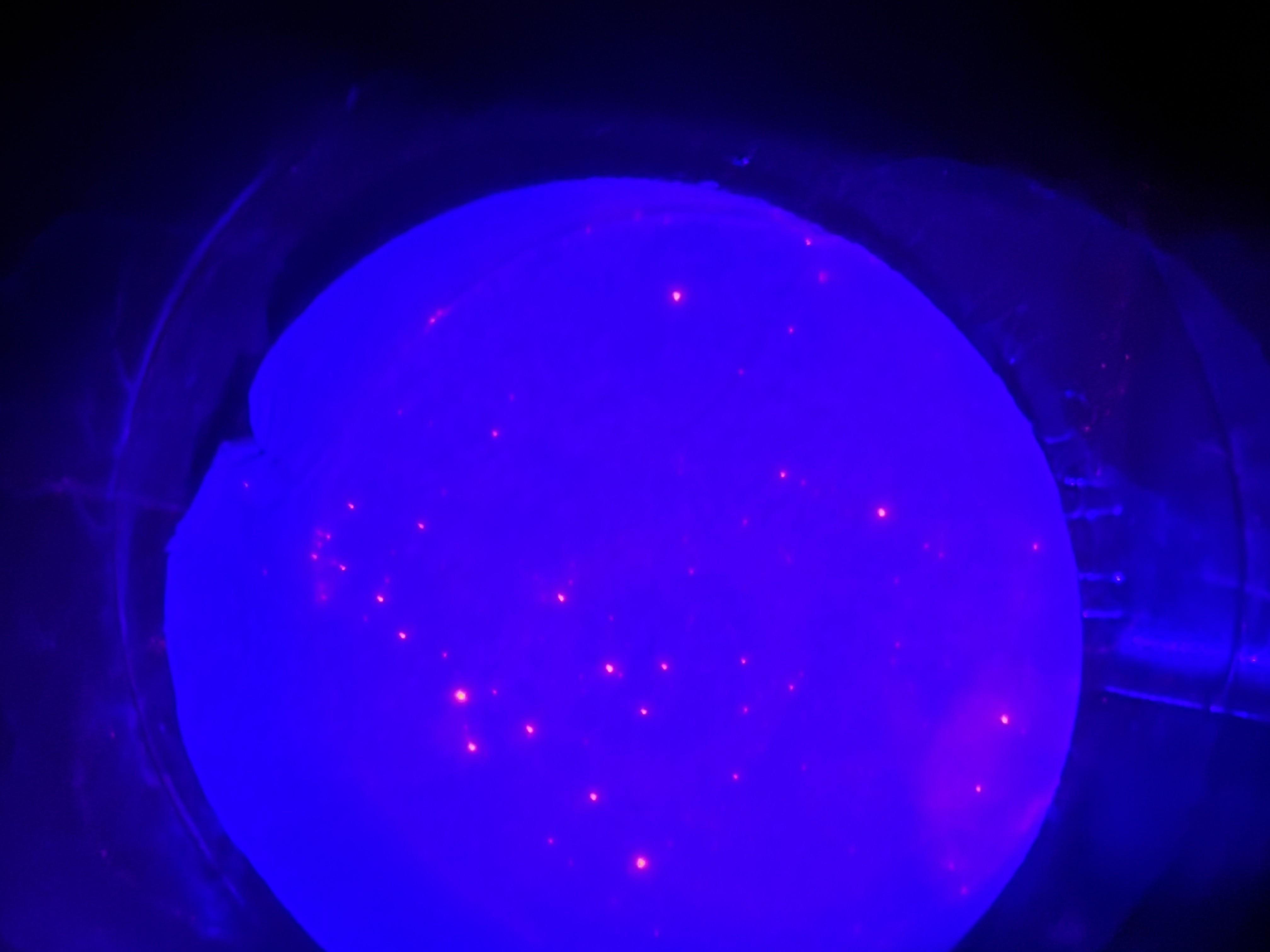
One-year-old SmartWater bottle. Hard to count individual dots.
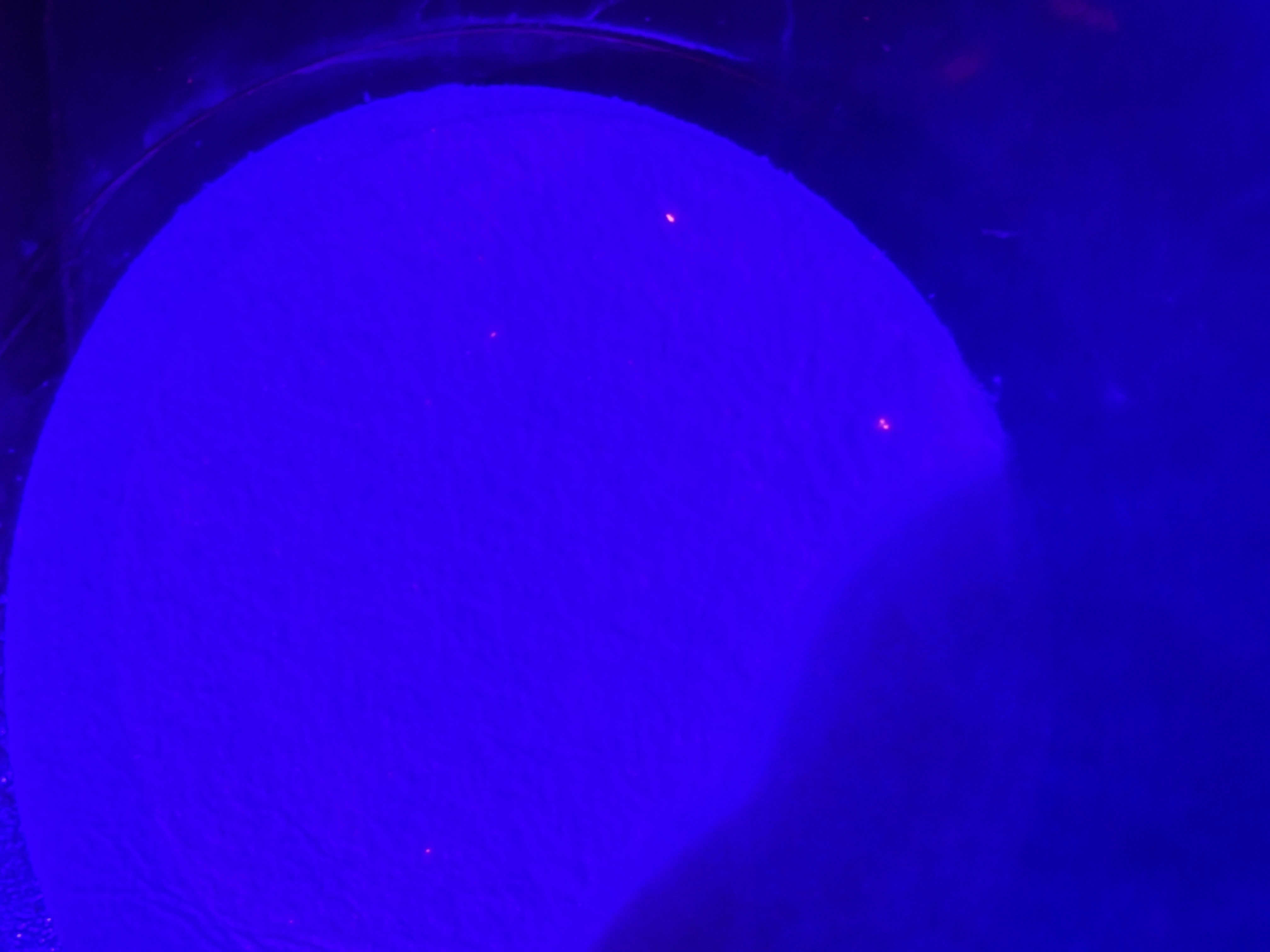
Reference baseline. Distilled water through the full process: 0–3 particles.
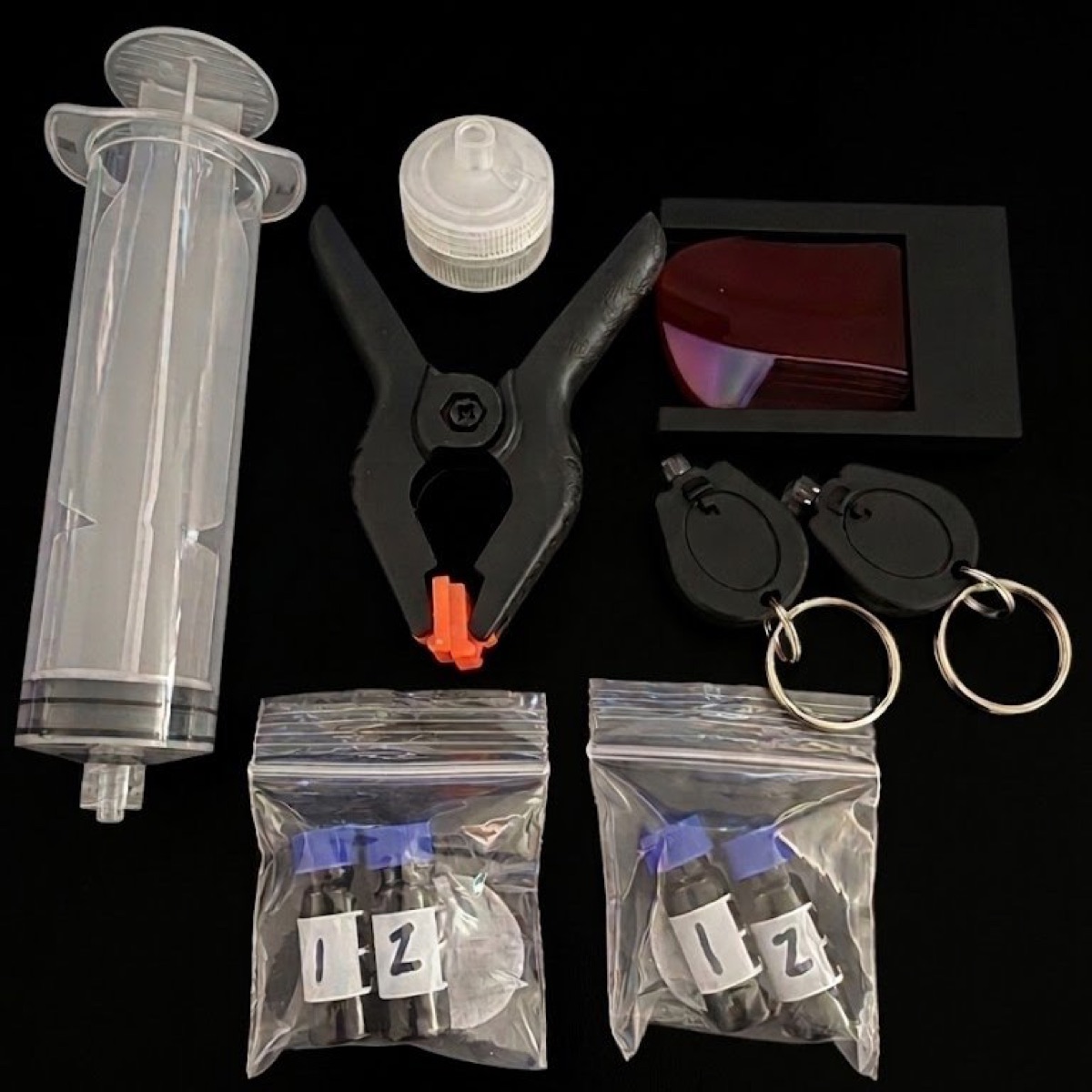
What ships in a $75 kit: digital microscope, phone stand, reagent vials, membrane filters, and syringe.
Test what you actually drink
Same kit, four common use cases. Each guide walks through the specific samples worth running.
Microplastic test kit for tap water
Cold morning tap, hot tap, kitchen vs bathroom. Find which sample in your house has the most.
Read the guideMicroplastic test kit for bottled water
Aquafina, Fiji, Dasani, your store-brand. Most of the plastic is from the bottle, not the source.
Read the guideMicroplastic test kit for filtered water
Brita, PUR, ZeroWater, Berkey, reverse osmosis, fridge dispenser. Verify yours actually removes plastic.
Read the guideMicroplastic test kit for baby bottles
Trinity College Dublin 2020: 16.2 million particles per liter from polypropylene formula prep. Test your bottle.
Read the guideComparing to a lab? In-home vs lab microplastic testing — cost, speed, accuracy →
Compare the microplastic test kit to the alternatives
Honest comparisons against the labs, the DIY route, and the other kits people ask about.
In-home vs lab microplastic testing
Cost, speed, accuracy — when each is the right tool.
TapScore vs The Water Test
Mail-in lab vs in-home kit, side by side. Use both is the strongest play.
Best microplastic test kits in 2026
Honest rundown of every option — including ours, with the bias disclosed.
Microplastic test kit reviews
Real filter photos from real customers. No fabricated stars.
For parents
Baby bottles, formula, kid water bottles. Research-led, no fear-mongering.
How to test for microplastics in the home
The full step-by-step — supplies, timing, and how to read your filter.
Learn the method behind the kit
Nile Red staining is the same method published in peer-reviewed microplastic research since 2017. The kit packages it for a kitchen counter.
- What is a microplastic test kit? →
- How microplastic test kits work — the chemistry, step by step →
- Are microplastic test kits accurate? — honest limits →
- Nile Red microplastics test — the method, history, citations →
- Nanoplastics, explained — the sub-micron fraction the kit can't see, and why it matters →
- Full methodology + peer-reviewed citations →
Microplastic test kit — FAQ
What is a microplastic test kit?
It is a kit that lets you see the plastic particles in a water sample yourself, without a lab. You stain 100 mL of water with Nile Red dye, push it through a syringe filter, and look at the filter under the included digital microscope. Plastic fluoresces bright pink. The Water Test kit is $75 and includes two complete tests.
How much does a microplastic test kit cost?
The Water Test in-home microplastic test kit is $75 with $6.99 shipping and includes two tests. Conventional mail-in lab testing runs $598–$835 per single sample, so a two-test in-home kit is roughly 12–16x cheaper per sample.
Can you really test water for microplastics in the home?
Yes. The kit uses Nile Red — the same fluorescent dye used in peer-reviewed microplastics research, including the 2017 Orb Media survey that found microplastics in 94% of US tap samples. It binds to plastic polymers but not to minerals or dissolved solids, so stained plastic glows bright pink. You look at the filter under the included digital microscope and count the particles yourself, live, in minutes.
Is there a microplastic test kit near me?
There is no need for a local lab. The kit ships for $6.99 to your door anywhere in the US, and you run the test yourself in about 15 minutes — no appointment, no technician, no sample to mail.
How accurate is an in-home microplastic test kit?
Nile Red staining is the standard consumer-accessible method for detecting microplastics and is used by labs worldwide. The kit reliably answers whether plastic is present in a sample and how much. It does not identify the specific polymer — that requires py-GC/MS instrumentation — but for the question "how much plastic is in what I'm drinking," it is a direct, visual answer.
What can you test with the kit?
Anything you can pour 100 mL of: tap water, bottled water, filtered water from a pitcher or reverse osmosis system, fridge-dispenser water, brewed tea or coffee, prepared baby formula. Each kit does two samples, so you can run a side-by-side — for example, tap versus filter output, or unfiltered tap versus bottled.
How long do results take?
About 15 minutes of active work spread across roughly 75 minutes total — 30 minutes for the peroxide digest, 30 minutes for the Nile Red stain, then 1–2 minutes to push through the filter and look at it under the digital microscope. The pink particle reveal is immediate once the filter is under the microscope. No mailing, no waiting for a technician, no PDF.
Does the microplastic test kit detect nanoplastics?
No. The kit's 25mm syringe filter has a 1 micron pore size, which catches the lower bound of conventional microplastic counting (down to ~1 µm). Nanoplastics — particles smaller than 1 µm — require a lab: electron microscopy, stimulated Raman scattering, or py-GC/MS. The kit measures the visible-by-fluorescence microplastic load, which is the size class implicated in the 2017 Orb Media tap-water findings. Nanoplastics still matter — they're the fraction small enough to cross into blood, brain, and placenta, and a Columbia 2024 study found bottled water held ~240,000 particles per liter, about 90% of them nano. Your microplastic count is the visible proxy for that larger invisible load. See our nanoplastics explainer at /nanoplastics.
Can I test my Brita or RO filter with this kit?
Yes — it's the best way to use the kit. Run one test on your tap water (input) and one on your filter's output. The delta is how much your filter actually removes. Two tests per kit is exactly enough for this A/B. See the filter teardowns at /tested and the per-filter pages: Brita, PUR, ZeroWater, Berkey, reverse osmosis.
Will the kit tell me which polymer is in my water?
No. Polymer identification requires py-GC/MS — pyrolysis gas chromatography mass spectrometry — which is a five-figure instrument. The kit answers "how many plastic particles are in this sample" and "how does this sample compare to another." For most people, that's the question.
Is there a microplastic test kit on Amazon?
There are products on Amazon that test for hardness, chlorine, lead, or pH using paper strips — none of those are microplastic tests. As of 2026, no consumer microplastic test kit using the Nile Red fluorescent staining method ships from Amazon. The Water Test ships direct from the manufacturer to keep the price at $75 instead of pricing in a marketplace fee.
What's the difference between this and a TapScore lab test?
TapScore and similar mail-in labs run a much wider analysis — heavy metals, PFAS, hardness, sometimes microplastics — for $200–$835 per sample, with results in 2–4 weeks. The in-home kit is microplastics-only, two tests per box for $75, with results you see yourself in 15 minutes. For a one-time deep dive on water quality use a lab. For ongoing visibility on plastic load — testing the filter you just bought, testing the bottled brand you switched to, testing your kid's formula bottle — the in-home kit is the right tool.
Explore the microplastics test kit
Same kit, every source. Here's the version of the question that matches yours.